Carême
21.10.2023 au 29.11.2023
Après la perte des données stockées sur un disque dur archivant tout mon travail sonore depuis 5 ans, j’ai décidé de me soumettre à un carême sonore. Pendant 40 jours , un son est fabriqué et publié dans la foulée. En résulte une exploration sonores autour des thèmes de recherche développés pour l’installation You have the right to remain silent : Arme Sonore, psychoacoustique, manipulation mentale, Liens qu’entretiennent les nouvelles technologies, la culture & la guerre, émergence des Ia Militaire.
Mixant synthèse analogique modulaire, fields recordings, synthèse vocale, » internet sampling » & « IA field recording », et génération sonore par IA grâce à RAVE, développé par le labo ACIDS, IRCAM

IRPR
Institut de Recherche Psychoacoustique de Roubaix
Projet développé avec Thomas Moesl
Exposition: Source des liens , Espace Croisé, Couvent des Clarisses, Roubaix 2023
Le palais hermétique de la mémoire
Le palais hermétique de la mémoire est un objet architectural particulier : A chaque fois qu’un humain cherche à mémoriser une pensée grâce à la méthode de loci ou palais de la mémoire, une nouvelle pièce aux images de ce souvenir apparait dans le palais. Celui ci est composé d’innombrables pièces, dans une infinité de style et de tailles. Il emmagasine un espace potentiel de ma mémoire humaine.
Cette série radiophonique propose une exploration thématique de ce palais en choisissant une trajectoire et en explorant les pièces que l’on découvre alors en fermant les yeux Ces Films intérieurs proposent à l’auditeur ou à l’auditrice, des architectures immatérielles fictives, intrigantes et inquiétantes, qui s’esquissent au fur et à mesure de l’écoute. Ces espaces de projection qui accueillent nos souvenirs, notre imaginaire, sont autant d’expériences individuelles à être vécues. Le spectateur, la spectatrice, est invité·e à pénétrer dans Le Palais Hermétique de la Mémoire, à s’y mouvoir, à l’habiter, à se l’approprier. A écouter de préférence les yeux clos, dans un lieu calme et sans stimulations supplémentaires.
Prochain épisodes 2024:
- Les artisans de la matière de l’immatériel
- Crise identitaire

LE PALAIS HERMÉTIQUE DE LA MÉMOIRE -ÉPISODE N º 2 L’EXTRACTION FORCÉE
Entretien en anglais entre Nora Sternfeld (Professeure pour l’éducation artistique à la HFBK Hambourg, commissaire d’exposition et conservatrice) et Flora Bouteille (1993).
What is sedimented in the white cube? It’s about a history of denying history maybe?
It’s About the need of artist to make a point. And very concretely historically if I think about the history of the white cube I think on the one hand on artistic self organisation, on the Secession for example in Vienna, of a collective of artist who decide to come together against the existing norms and academic rules in order to reinvent themselves. So what I see is a history of a practice of collective reinvention on the one hand, and on the other had I also see a history fo fear. Of all the complications that come with struggling together a history of even putting this out and away and destroying it, so in somehow I see the white space as « the Haus der Deutschen Kunst » that hitler built together with an architect in Munich with lot of space for every kitschy art work that he showed there, while on the same day on the other side of the street opened the exhibition antisemitic and racist and full of hate exhibition that was called degenerate art and that in its all architecture and design was mocking dada exhibition. so I see also a certain resentment, a resentment agains life in these spaces.
How are the specters within the museum and especially the white cube confronting your definition of para-institution ?
Actually the thing with the para-institution is that we have nothing else han what is there. There is no way to imagine that there would be another world in which we could act better, differently, in which the sun would always shine. The only thing we have is what is there and what we have here in the very moment, in many places of the world are white cubes that play the game of the communal space. Let’s say « assembly white cubes » and even if they are not white but gentrification place in dirty old factories, or other dirty place that soon will be sold or rented for a lot of money they are still white cubes in a certain sense. They are context that are used but if they are used by capitalism they can also be in
somehow counter used, they can be used in order to imagine another world, and try it out alreadynow and this is what I purpose as a para-institution, to take the offer seriously. The offer that is in as much in these empty discourses, that use it all the time, use the worlds of collectivity, collaboration, contact-zones, platform, of assembly and then actually what we say we do we assemble and what will; happen when we do it ? A lot of contradiction will come up, and then the question is
how can we learn to act without denying them ?
How do we build the « yet unthinkable » ?
No one can move in a place that doesn’t exist yet and especially not alone There is absolutely no way to imagine anything that doesn’t exist yet alone; anything I will imagine will always just be what exist. And I have the experience, and this is why im also sure, that if we come together from the knowledge that we have from experiences of marginalization and experiences of struggle, knowledge about inequalities and moments of being not free, that help us to imagine equality and freedom anew. That we can learn from each other like little steps and from showing each other what might be thinkable with doesn’t exist yet, these imaginations can emerge. And that’s why I would say it doesn’t even make sens to imagine another world alone, it will always just be the same shitty world in which we already are. What is the ecosystem/economy of the para-museum ?
So the economy of the p-museum is two dimensional. One dimension is that the para-museum is in somehow the collaborative imagination fo another institution in another world already now and in this sense it is really parasitic of the existing economy. There is no other possible economy although while we work on it, imagine it, and experience it many other economies are experiencing with that which just happens because we try things out together and we need to imagine it because we do it with people who would have different positions in this existing exploitative economy and this means that we need to be imaginative also. For the reason to survive together in somehow. And all this imagination already create other possibilities for other economy but what is sure is that on an economical level its about the reappropriation of the means of what make us move. And in this sense the economy is something to think about together: how would we like to work, and how would we like to share what we want to do ?
What’s the future of the para-museum ?
For me the para-museum is a way to relate with these conflictualities that are already there and that are unarchivable, ungovernable by the means of the museum. To relate to them and through the energy that is related to that, entrer a process of imagination of another institution in another possible world. And this collaborative collective process of imaginations that happens in different encounters from which we learn something that doesn’t exist yet; this process helps us to bring something from the future in the space already now.
Has neo-liberalism worked on taking the power out of the image ?
If you imagine the portraits fo the kings, of course the image was related with power and then, now, it’ like a process of extraction, so it’s has representation functions in a moment in which power is taken away from it, in which it is possible that you would have an image of a struggle in a museum without any consequences. because, like in the moms for example you could have photos of the labor struggle sagging the moms in the 1970 a documentation of the claims of the worker’s coalition, while at the same time no one wonders that these claims have had no consequences in the institution. How is it possible ? How is it possible that this representation is not a threat anymore ? I think it has something to do with the fact that representation has lost is power, in somehow we already live in partly post-representational societies which is scary and sad because obviously it is about means of governing that don’t even need representation anymore, like algorithms or mathematics, asking us to click not asking us to vote. And this might be a symptom, The loss of power of the image might be a symptom of this scary post-representational way to organize us. And I realized that the more the institution are privatized, the less they are in the common hands, the more they talk about public; public space and public programs. And I see that here happens something because the claim for the public in social struggle was a claim for collective ownership. You could not take the common away from the public, at that time. So to take up the museum, to take up the Louvre meant that the things inside there are common goods. It’s not only an image of the Louvre. To make it public meant to make it owned by everyone, and now we live in a society in which theprivate is not a contradiction to the public anymore. And I see this as a symptom of something scary and problematic.
How do you define the world radical and how can we be radical in our own practices ?
I own the use of the world radical to two contexts, one is radical democracy, the political theory by Ernesto Laclau and Chantal Mouffe, and Oliver Marchart to work a lot about and with them. So radical democracy is about taking democracy seriously and realize that existing democracies in which we live in are far not as equal, free, and solidarian as their vocabularies do as if they would be. And in this sense radical democracy is about an equalization of equality, a liberation of freedom, solidarization of the collaboratives and if I say it like this, if this is what Oliver Marchart calls the democratic horizon, then radical really means roots in this sense, means to built a horizon towards what democracy is fighting for, goes, and is related to this struggle that moves it. And the other context I own the use of the world radical, is the history of radical pedagogy. And here again it is about the building of consciousness of how the existing power relations divide us, organise us, how no one is alone with the despair and the difficulties of exploitation and marginalization that this is something to do with the existing power relations. And to build up education from there, from a consciousness of this position that actually puts one self in the possibility to imagine it differently which would be the core, the beginning of building another world together. And by this not only question but turned on the existing one, that’s why Paolo Freire says its about
being tactical within those institutions and strategically outside. So tactically in the white cube in order to imagine it to become something else, and here is again this other way of understanding the radical: consciousness about a position and together with others taking the strength from exactly that to imagine another world and I would say to live it to learn it already now. If we now take this two meanings of radical than I would say it’s exactly this, it is to say that there
is no way to accept the extraction, that is to go back to what is said, or to go forward to what we promise when we say what we say.
Why do you use the word extraction to talk about the relation between public and private properties ?
I use the world extraction because I think that the strategies of capitalism have a totalitarian dimensions, in many different ways, the idea is actually to get, but not only to get oil from its concrete context and bring it somewhere else and make it work as energy somewhere else, it is about getting all the oil possible so that it’s even more scars, and everybody can be blackmailed I see these strategies there to get in somehow the total. To get the total of books scanned by google, to get the total of knowledge so that something that si not in relation to scarcity that is just part of life, can be economized in a relation of scarcity in which demand and supplie can work in a very specific can of economy. But with knowledge it’s clear, the more we know, the more we know and if we know together we will know more. And it is actually the hard work of capitalism and its means of privatisation to make it a scars good. So thats why I use the word extraction. It’s about owning everything. Water is the best example, to privatise water means that you really need and if u really need it then u will pay for it. So it’s not only the idea of extracting water, it’s the idea of making water a private goods in roder to put people in situations for which in order to survive they have to pay.
Soleil noir :
Documentaire de Charles de Kouchko et Camille Courcy. musique: victor villafagne 107″ 2019
Un bruit sourd. Nous ouvrons les yeux. Dehors, c’est déjà le chaos. La bataille de Mossoul vient de commencer. Une centaine de milliers d’hommes, venus de toute l’Irak, de toutes confessions confondues, s’allient dans la reconquête de la plaine de Ninive. A travers les yeux du major-général Najim Al Jibouri, ceux de ses hommes sur le front, et ceux des civils perdus dans l’enfer des flammes et des bombardements, nous plongeons en immersion dans une guerre absurde, violente et terriblement humaine.

DRUMS
DRUMS
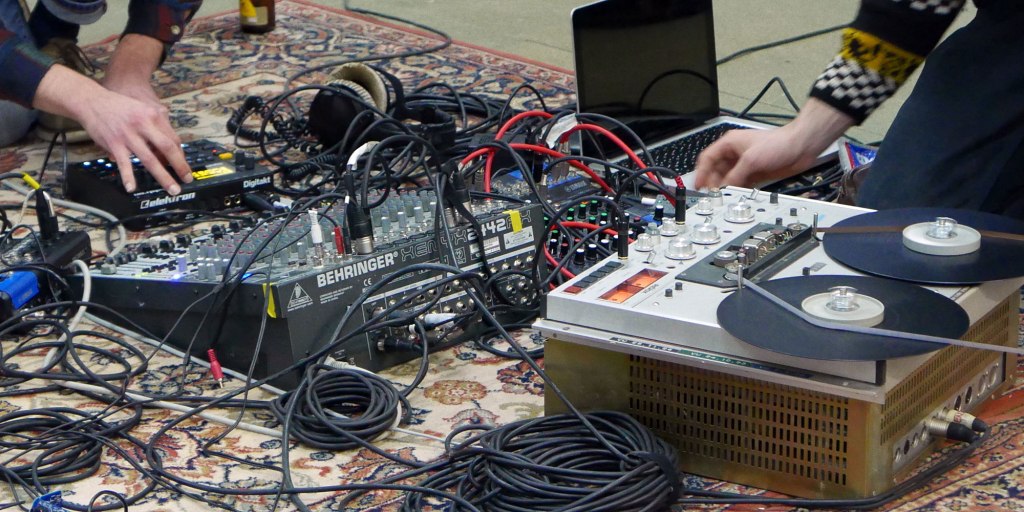
est un collectif de neuf artistes qui mènent chacun une recherche dans le domaine du son. En tant que promotion 2020 du post-diplôme Arts et créations sonores à l’Ensa Bourges, Le collectif Drums trouve son nom dans l’éponyme pièce composée en 1975 par Laurie Spiegiel, en hommage à ses compositions pionnières de musique électronique. Drums à une pratique transdisciplinaire et prolifique et tend à explorer des expériences collectives.
DRUMS #2 : Live Vidéo multicam de 3h pour festival Mondes Multiples
DRUMS #1 : 5 live de 2h pendant 5 jours pour Ars Electronica 2020
DRUMS will activate a special protocol: DDD. DDD is a conceptual analytical system where the association of three words starting with D creates a tridimensional investigation space. As sound matter is a wave working in three dimensions, we assign it to a tridimensional physical space.
The protocol of our action is as follows: Picking three “D” words per day. These three words frame our exploration field.
Examples or potential D patterns:
Dimension / Decay / Decadence / Decline / Dispute / Demon / DIY / Dilemma / Dissonance / Decolonization / Danger / Discourse / Demystify / Dissolution / Drift / Dystopia / Debate / Decide / Damage / Dream /
Our broadcasting center will be based at Haïdouc of the Antre Peaux Art Center to offer a counterpart to broadcasting: a laboratory of exploration that will allow us to shape and take part in the broadcasting device.
Despite the distance and the dissociation of the sound bodies, Drums Radio will become a transdisciplinary moving space: instruments, machines, sound installations, actors are melting into a micro universe.
Links:
- ensa-bourges.fr
- artetcreationsonore.eu
- antrepeaux.net
- radioradio.fr
- https://site.stationofcommons.org/peers/drums-radio
Artists:
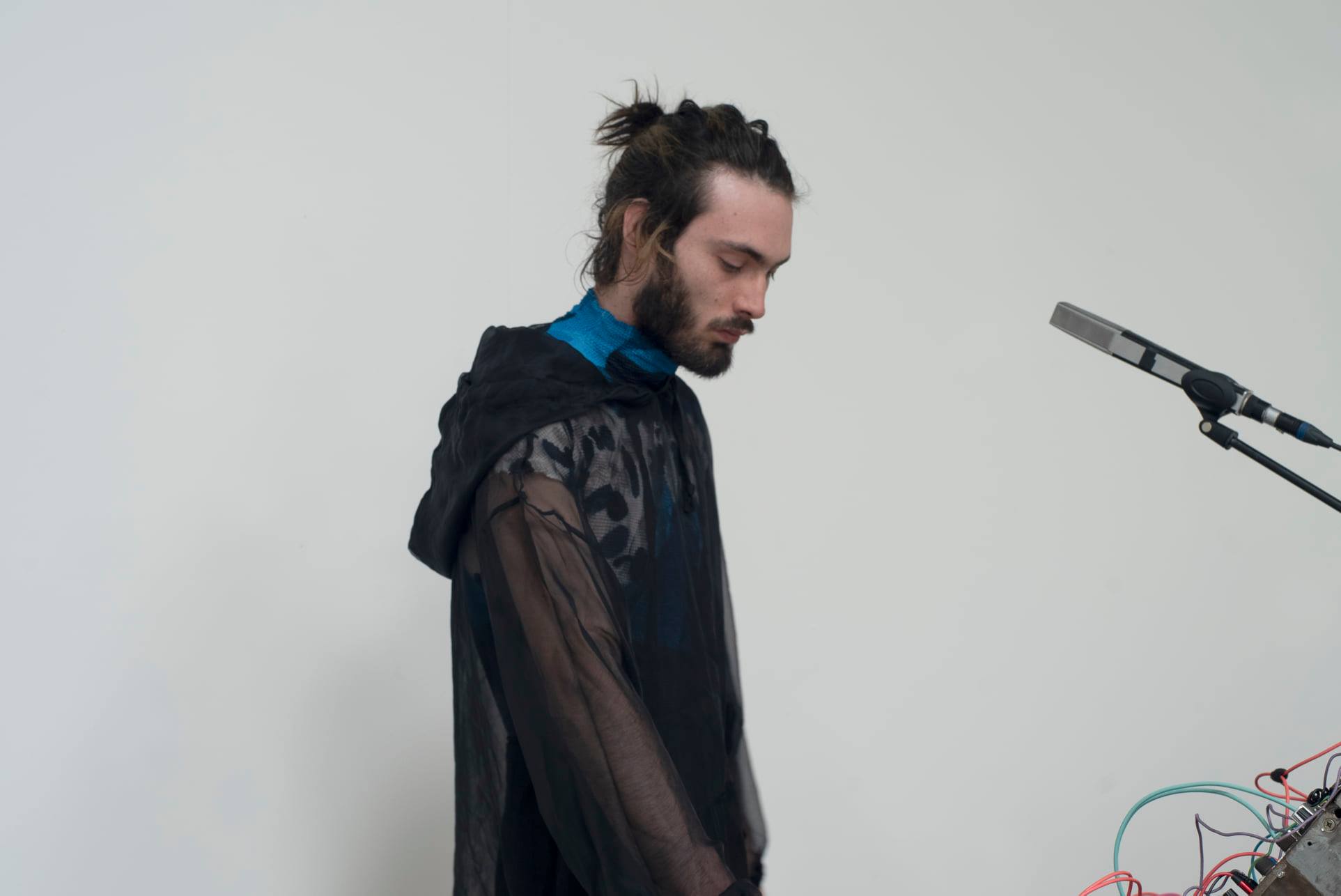

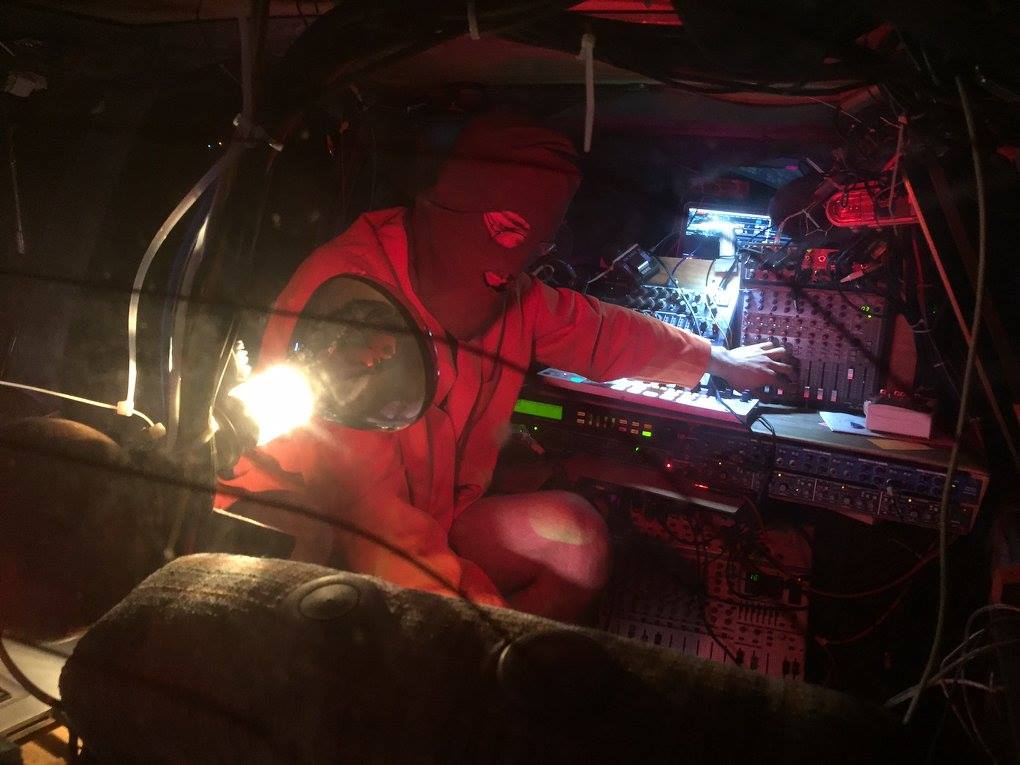

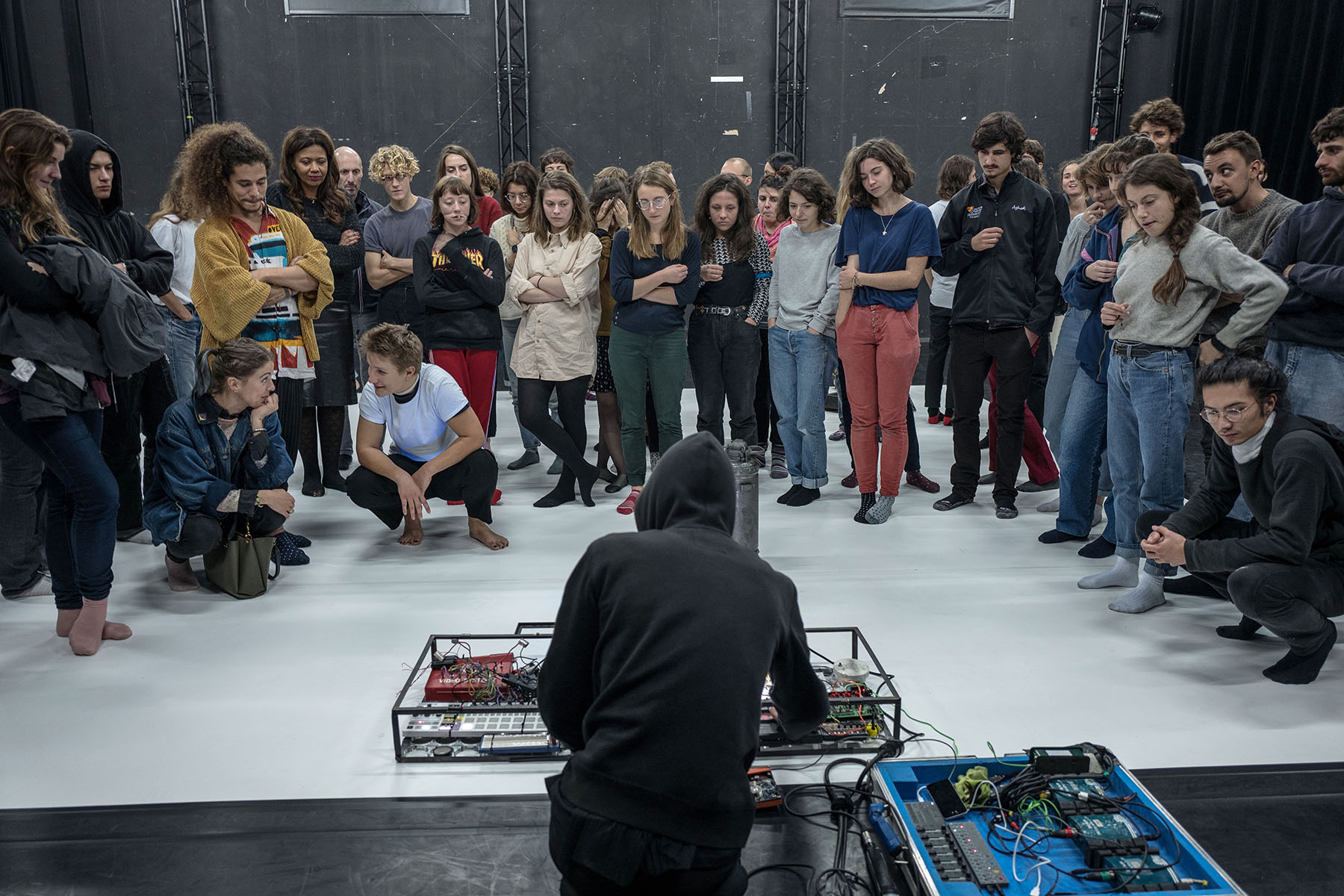

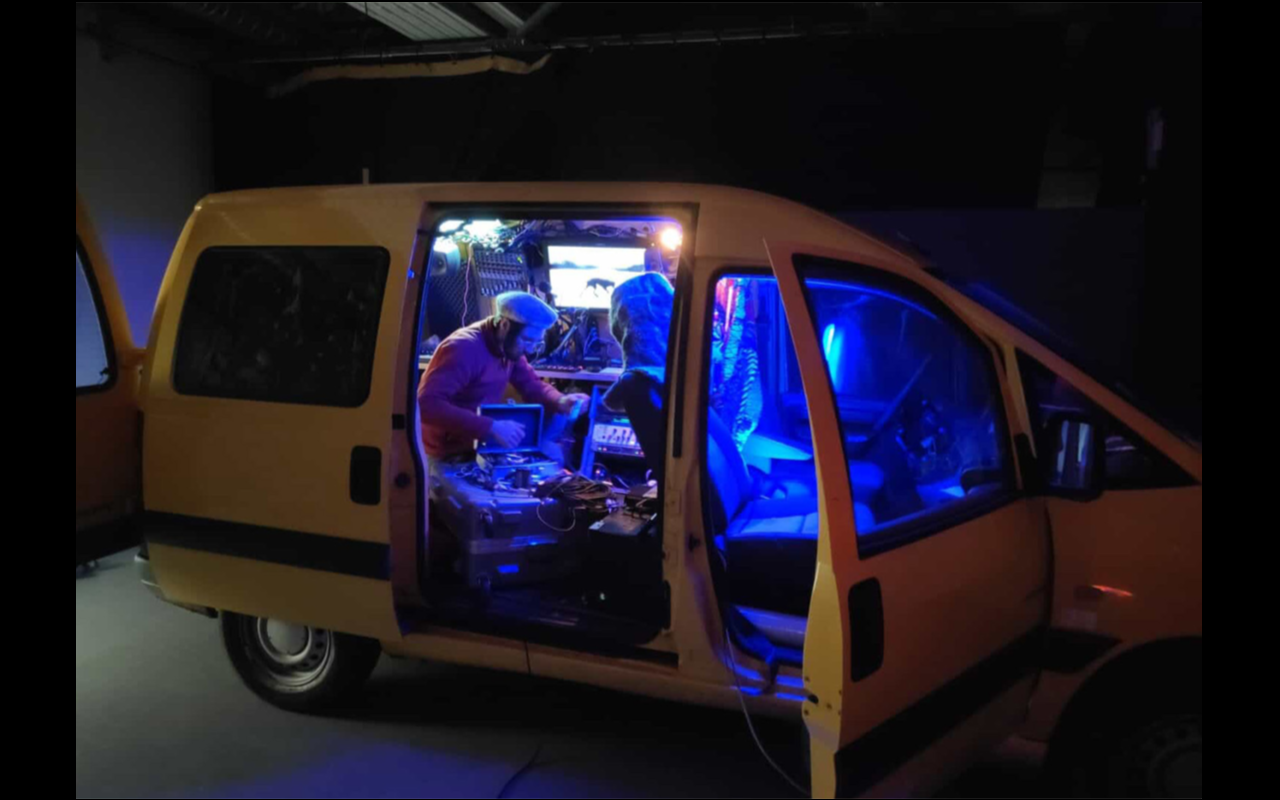
 Victor Villafagne